Pea Rock Delivery
Small, rounded and smooth underfoot. Called pea gravel everywhere else — in Florida it is pea rock.
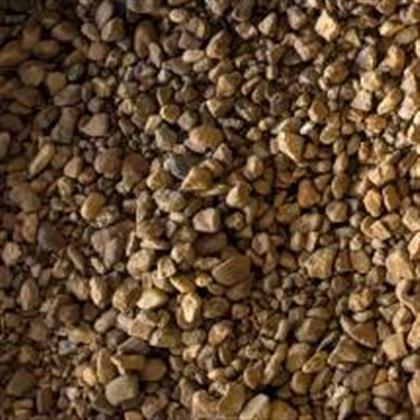
Pea rock or pea gravel?
Same material, different vocabulary. The rest of the country calls it pea gravel; South Florida calls it pea rock, and if you ask a yard here for pea gravel you will get a slight pause before they hand you the same thing.
It is a small, naturally rounded stone at about three-eighths of an inch nominal, washed clean, in a mix of tans, greys and off-whites. The rounded shape is what distinguishes it from #89 rock, which is a similar size but crushed and angular.
That difference drives where each one is used. Rounded feels good underfoot and looks softer, so pea rock goes on pool decks, paths and decorative areas. Angular locks under load, so #89 goes under pavers and around pipe.
What it is good at, and what it is not
Pea rock is the default decorative stone in this market for good reasons. It is comfortable to walk on barefoot, which matters enormously around a pool. It drains freely. It does not break down or stain. And it is inexpensive compared with imported decorative stone.
Its weakness is that it never locks. Rounded stone rolls, which means pea rock migrates — out of beds, off paths, into the pool, down the drive. On any area with a slope or with traffic, install an edge. Aluminium or plastic landscape edging, a paver soldier course, or a concrete curb; anything that gives the stone a boundary.
For the same reason it is a poor choice for a driveway. It will not carry vehicle traffic without rutting and spreading. Use limerock, shell rock or millings for anything you drive on.
Installing it so it stays put
Two to three inches is the right depth for a decorative area. Less and the ground shows through; more and walking on it feels like wading.
Put landscape fabric underneath. Without it the stone works down into the soil and weeds come up through it, and within two years the area needs redoing. With fabric and an edge, a pea rock bed stays clean for many years with nothing more than an occasional rake.
Plan on topping up lightly every few years, particularly in walked areas. That is the nature of loose stone rather than a failure.
Quantities
At roughly 1.4 tons per cubic yard, one ton covers about 105 square feet at 2 inches or 70 square feet at 3.
A typical pool deck surround or side-yard run needs only a few yards, and that is a perfectly normal order — our minimum is one cubic yard. If you are buying other materials for the same job, we can put them on one truck and save you a second delivery charge.
What it costs, delivered
Specification
| Property | Detail |
|---|---|
| Nominal size | 3/8 inch |
| Shape | Rounded and water-worn, not crushed |
| Washed | Yes |
| Colour | Mixed tans, greys and whites depending on source |
| Approx. weight | 1.4 tons per cubic yard |
| Coverage at 2" | ~105 sq ft per ton |
| Coverage at 3" | ~70 sq ft per ton |
Figures are typical, not guaranteed. Weights and gradations vary between pits and sources. If your job is specified, send us the relevant plan sheet and we will match it — and confirm quantities against your own scale tickets once you are running.
What it is used for
- Pool deck surrounds and landscape borders
- Walkways, paths and courtyard surfaces
- Drainage beds and dry creek features
- Playground surfacing
- Exposed aggregate concrete finishes
- Ground cover in planting beds and side yards
- Under decks and in side-yard drainage runs
Working out how much you need
Material is sold by the ton. Plans are drawn in cubic yards. That mismatch is where most ordering errors come from, and they are expensive in both directions — running short stops a crew, and over-ordering by a large margin ties up money in a pile.
The arithmetic: multiply length by width by depth in feet, divide by 27 to get cubic yards, then multiply by the material's weight per yard. Most rock runs about 1.35 to 1.4 tons per cubic yard; compacted base is heavier at roughly 1.65; topsoil is lighter at about 1.15.
Then allow for compaction. Base and fill lose roughly 20 to 25 percent of their loose volume once they are properly compacted, so the tonnage you order should be above the theoretical plan volume. Our tonnage calculator builds that allowance in and converts the answer into truckloads.
Order slightly heavy. Two extra tons in a pile costs almost nothing and always gets used. Two tons short on a Friday afternoon costs you a whole extra delivery and a crew standing around.
Pea Rock — common questions
Is pea rock the same as pea gravel?
Can I use pea rock for a driveway?
How deep should pea rock be?
How do I stop pea rock from spreading everywhere?
Where we deliver Pea Rock
Both coasts. Palm Beach, Broward and Miami-Dade down through the Keys, and Manatee, Sarasota, Charlotte, Lee and Collier on the Gulf side. Mainland deliveries are same or next day; the Keys are scheduled runs.
Related materials
Stop Babysitting Your
Material Suppliers. Call Us.
A locked quote in under an hour. Trucks on site when you need them. One invoice when the job's done.